How to Select the Right Crane Capacity – A Decision That Impacts Safety, Productivity & Cost
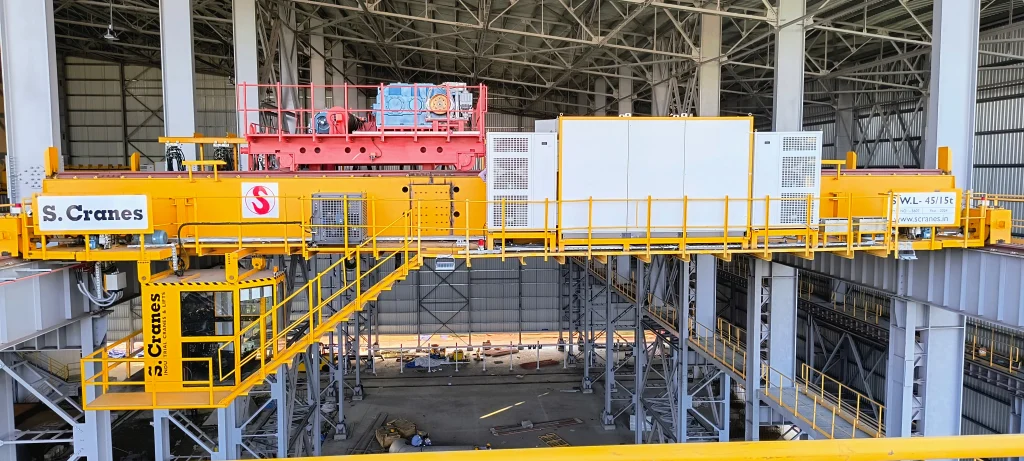
Are you planning to purchase an Overhead Crane, Goliath Crane, or Underslung Crane?
One of the first questions you’ll be asked is:
“What crane capacity do you require?”
Many buyers answer this based only on the weight of the heaviest load they lift. Unfortunately, this is one of the most common mistakes made during crane selection.
Selecting the right crane capacity is not just about lifting a load. It is about ensuring safe operation, maximum productivity, longer equipment life, and avoiding unnecessary investment.
So, how do you determine the right crane capacity?
- Identify Your Maximum Load
Begin by identifying the heaviest load that the crane will ever be required to lift.
Ask yourself:
- What is the maximum weight of the product, machine, or material?
- Will attachments such as lifting beams, grabs, magnets, hooks, slings, or lifting fixtures also be used?
Remember:
Crane Capacity = Load Weight + Weight of all Lifting Accessories
Ignoring the weight of lifting accessories can result in overloading the crane, reducing its service life and creating a serious safety hazard.
- Plan for Future Growth
Many industries expand production over time.
Before finalizing the crane capacity, consider:
- Will larger components be handled in the future?
- Is production expected to increase?
- Could future projects require heavier lifting?
Choosing a crane with slight additional capacity today may eliminate the need for expensive replacements tomorrow.
However, excessive over-sizing should also be avoided.
- Understand Your Duty Cycle
Two cranes with the same lifting capacity may have completely different performance capabilities.
Consider:
- How many lifts are performed every hour?
- Will the crane operate continuously throughout the day?
- Is it used occasionally or in heavy production?
A crane working continuously in a manufacturing plant requires a higher duty classification than a crane used only a few times each day.
Selecting the correct duty class significantly increases reliability and reduces maintenance costs.
- Consider the Nature of the Load
Not every load behaves the same way.
Ask yourself:
- Is the load fragile?
- Is it long or bulky?
- Does it swing easily?
- Is the centre of gravity uneven?
- Never Ignore Safety Margins
Operating a crane continuously near its rated capacity increases stress on:
- Wire ropes
- Hooks
- Hoists
- Gearboxes
- Motors
- Brakes
- Structural members
While cranes are designed with safety factors, they should not be treated as an excuse for continuous maximum loading.
Selecting the appropriate capacity ensures safer operations and significantly extends equipment life.
- Consult the Crane Manufacturer
Every application is different.
A qualified crane manufacturer evaluates several parameters before recommending the right crane:
- Maximum load
- Span
- Lift height
- Travel length
- Operating environment
- Duty classification
- Frequency of operation
- Future expansion requirements
This ensures that the crane is optimized for your application—not oversized, undersized, or unnecessarily expensive.
The Cost of Choosing the Wrong Capacity
If the crane is undersized:
- Frequent overload situations
- Increased wear and maintenance
- Higher risk of breakdowns
- Production delays
- Safety concerns
If the crane is oversized:
- Higher initial investment
- Increased power consumption
- Larger structural requirements
- Higher maintenance costs over the crane’s lifetime
The right capacity provides the perfect balance between safety, performance, and cost efficiency.
Final Thoughts
An overhead crane is a long-term investment. The right crane capacity directly influences productivity, equipment life, operator safety, and overall operating costs.
Rather than selecting a crane based solely on today’s maximum load, consider your complete application, future requirements, and operating conditions.
Working with an experienced crane manufacturer ensures that you invest in a crane that delivers reliable performance for years to come.
At S Crane Engineering Works, we help industries select crane solutions that are engineered specifically for their operational needs—not simply by lifting capacity, but by understanding the complete application. The result is safer operations, reduced downtime, and maximum return on investment.